Shifting emotions and comparison culture reveal our need for God’s unshakable foundation
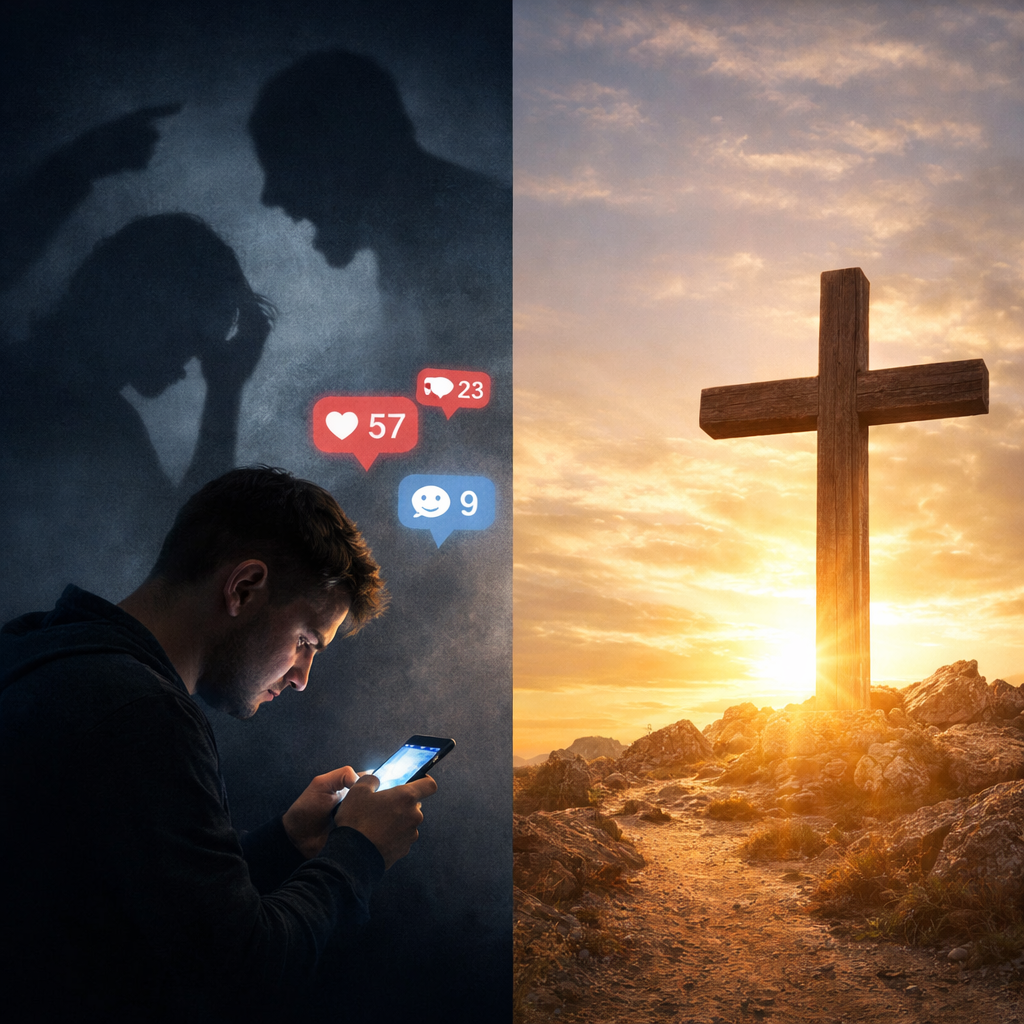
People scroll through social media and see smiling faces, perfect moments, and lives that look better than their own. Social Media Anxiety and Hope are powerful forces shaping how we interact with these platforms. Yet behind those images, many hearts feel heavy. This struggle affects every age. A pastor recently asked his staff how much time they spent online, and several reported six and a half hours a day. Research shows that adults often average four hours daily, while many teens spend more than eight hours on screens each day. Studies also show that heavy social media use increases anxiety, depression, and loneliness, and these patterns raise suicide risks across generations. These numbers remind everyone that emotions shift quickly when identity depends on online approval instead of God’s truth.
Many people then move between optimism and pessimism as life shifts around them. Optimism rises when circumstances feel good. Pessimism grows when life feels heavy. Both depend on what someone sees, hears, or fears. Both shift with daily pressures and changing emotions. They move like sand under the feet. The cycle of Social Media Anxiety and Hope can often deepen these emotional swings.
But God’s hope does not change with circumstances.
Hope stands on biblical truth, not on feelings.
Hope grows from who God is, not from shifting emotions.
Jesus spoke about this kind of foundation when He said that anyone who hears His words and obeys them stands like a house built on rock. The winds blow, the rain falls, and the floods rise, yet the house stands firm. But anyone who trusts emotions, circumstances, or online opinions stands on sand—shifting, unstable, and easily washed away (Matthew 7:24–27). In the age of instant updates, Social Media Anxiety and Hope confront us with a choice: where do we build our sense of self?
Optimism says, “Things will get better.”
Pessimism says, “Things will probably get worse.”
God says, “I am with you.”
That promise changes everything.
Optimism depends on what someone sees.
Pessimism depends on what someone fears.
Hope depends on who God is. God remains steady when optimism fades. He speaks peace when pessimism rises. God stays faithful when circumstances shift. Interestingly, the tension between anxiety on social media and hope rooted in faith is one of this generation’s greatest battles.
Scripture shows this again and again. David stood before Goliath without optimism or pessimism. He faced a giant with confidence because God stood with him. Paul worshiped in prison without denying pain or ignoring chains. He trusted God’s presence in the darkest place, and that hope carried him through trials nothing else could move. This contrast is a clear reminder: Social Media Anxiety and Hope both reflect our deeper spiritual needs.
God’s hope does not pretend life is easy. It declares that God stays faithful in every season. People chase optimism because they want relief. People fall into pessimism because they feel overwhelmed. God offers something deeper. He offers hope anchored in His unchanging love.
Hope says,
“God sees me.”
“God knows my battle.”
“He holds my future.”
“God will carry me through this season.” In a world where Social Media Anxiety and Hope are often in tension, it is vital to remember who truly holds our lives together.
Hope does not deny reality. Hope places reality into God’s hands. Jesus never promised life without storms. He promised His presence in every storm. God remains the rock under every weary heart. He remains the anchor when winds rise. He remains the foundation no circumstance can move. Therefore, amidst Social Media Anxiety and Hope, we can be anchored in something far greater than any shifting trend.
So when optimism feels shallow and pessimism feels heavy, a person can choose something stronger. They can choose hope. Not because situations change, but because God does not. The world shifts like sand, but God remains the solid rock that never moves.
This is the hope that holds.
He is the hope that stands.
This is the hope offered to anyone who reaches for Him.
Statistics on Social Media’s Effects
Pew Research — Teens & Social Media Use
Teens spend hours on social platforms daily, and heavy use is linked to higher emotional distress and comparison-driven anxiety. Of note, these statistics reflect the real-world connection between Social Media Anxiety and Hope among youth.
U.S. Surgeon General — Youth Mental Health & Social Media
The Surgeon General warns that social media significantly increases risks for anxiety, depression, loneliness, and destructive comparison cycles among young people. This underlines just how deeply Social Media Anxiety and Hope influence the well-being of this generation.
CDC — Daily Screen Time & Anxiety/Depression
The CDC reports that teens who spend four or more hours a day on screens show higher rates of anxiety and depression symptoms, a vivid example of the reach of Social Media Anxiety and Hope in modern youth culture.
Stanford Law Debrief — Social Media & Mental Health
Stanford research highlights the growing concern that social media overuse contributes to psychological distress across generations, not only teens. Clearly, Social Media Anxiety and Hope are shaping psychological trends well beyond adolescence.
Leave a Reply